

Put Your Oxygen Mask on First!
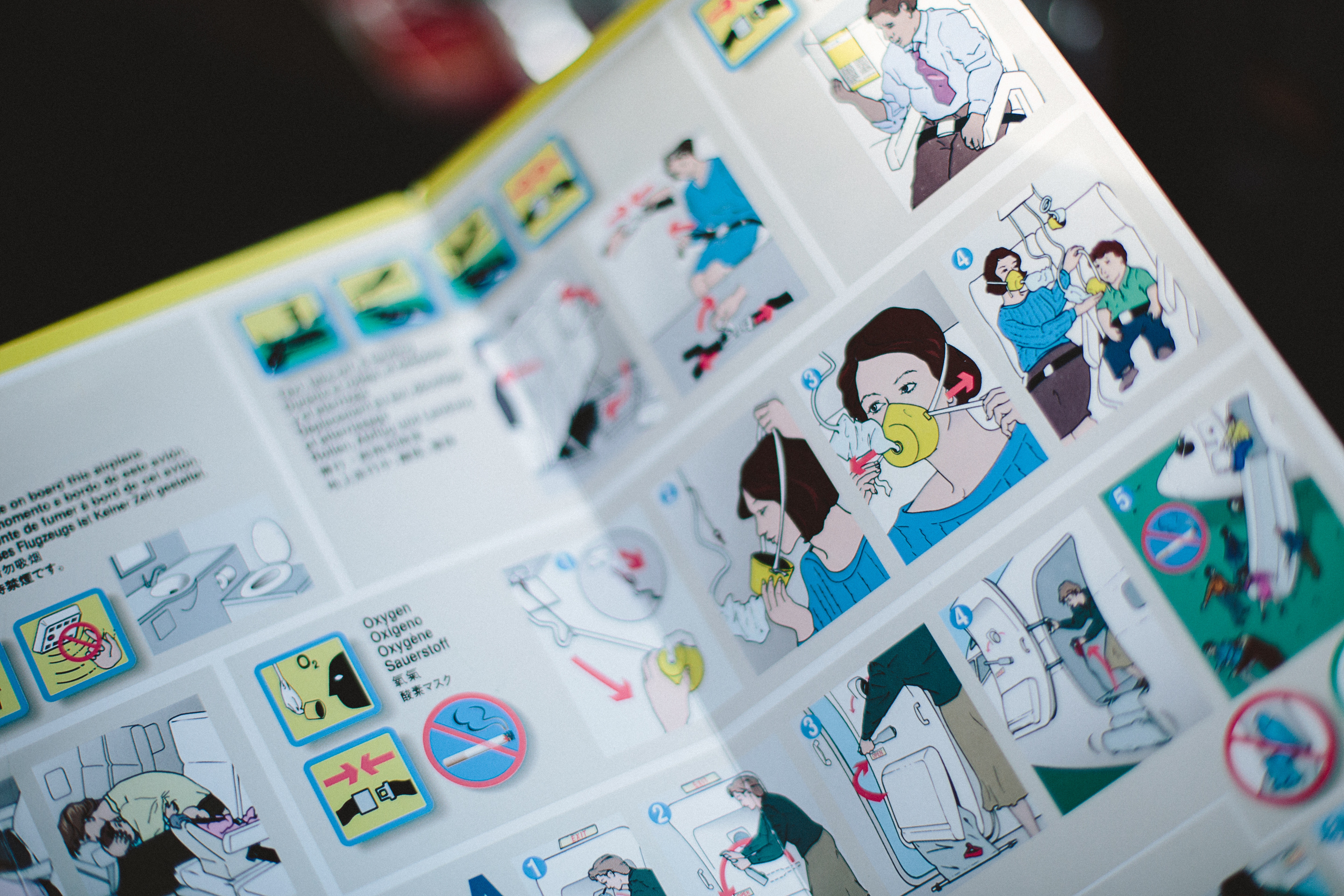
Upon entering a plane and settling into your seat, you are given a series of standardized instructions by the flight crew before takeoff. Most of us have heard them so often we’ve begun to tune them out, treating the safety briefing as background noise while we scroll through our phones or arrange our carry-on bags. But tucked within that routine monologue is a piece of advice that serves as a profound metaphor for the human experience. As part of the instructions, you are told that, “Should the cabin experience sudden pressure loss, oxygen masks will drop down from above your seat. Place the mask over your mouth and nose.” Crucially, the crew emphasizes that this mask is the first thing you should put on before anything else, including attempting to help another person.
Why do airlines feel the need to stress and emphasize putting your mask on first? On the surface, it feels counterintuitive, perhaps even cold-hearted. Our instincts—especially those of parents, caregivers, and partners—urge us to protect the vulnerable first. We imagine reaching for the child beside us or the elderly passenger across the aisle. Yet, the physics of high-altitude survival do not care for our sentiments. If you decide not to heed these instructions, the consequences can mean the difference between life and death. Without the mask, you slowly begin to lose oxygen, a state known as hypoxia. In this state, you don’t just feel tired; you slowly lose the ability to recognize faces and shapes, your cognitive functions fail, and eventually, you pass out. How helpful can you be if you can’t breathe and become unconscious? The answer is simple: not helpful at all. By neglecting your own needs in a crisis, you effectively remove the only capable helper from the situation, potentially leaving those you love in even greater danger.
The Biological and Emotional Reality of Hypoxia
In the context of flight, hypoxia is a physical emergency. In the context of our daily lives, “emotional hypoxia” is a slow-motion catastrophe. We are taking on so much and doing so much for others while systematically neglecting ourselves. We feel as though there is not enough time in the day to get things done, but the truth is deeper than a scheduling conflict. We are not prioritizing our basic needs and wants, leading to a state of internal depletion that mirrors the physical symptoms of oxygen loss.
Loss of Focus
Just as physical hypoxia impairs your vision, emotional exhaustion prevents you from seeing the reality of your relationships and your own potential.
Diminished Capacity
You cannot pour from an empty cup. When you are depleted, your ability to provide genuine love, patience, and support is severely compromised.
The Vicious Cycle
Neglecting yourself leads to burnout, which leads to resentment toward the very people you are trying to help, damaging the foundation of the relationship.
It’s quite clear—PUT YOUR MASK ON FIRST! Only when you are breathing steadily will you be capable of focusing and taking better care of others, especially those you love. If we plan on being helpful to our family, friends, or society, let’s make sure we have enough oxygen to save ourselves and then help others.
Relationships as Mirrors: The Reflection of Neglect
In the framework of Mirrors & Growth, our relationships act as mirrors that reflect our internal state back to us. When we operate in a state of self-neglect, we often think we are being “selfless,” but the mirror of our relationship reveals a different story. What our partners and children see in the mirror is not a hero of sacrifice, but a person who is irritable, distracted, and physically present but emotionally absent. When you refuse to put your oxygen mask on first, the reflection you project is one of martyrdom, which creates a heavy burden of guilt for those around you.
Radical self-love is not a form of vanity; it is the foundation of accountability. To be accountable in a relationship means taking responsibility for the energy you bring into the room. If you are constantly exhausted because you refuse to set boundaries or take time for self-care, you are essentially bringing a “suffocating” presence to those you love. By securing your own oxygen first, you ensure that the reflection you project is one of stability, vitality, and presence. This is the ultimate gift you can give to your loved ones: a version of yourself that is whole and healthy, rather than a fragmented shell of a person trying to keep everyone else afloat while drowning.
Breaking the “Groundhog Day” Cycle
We must become more self-aware and get out of the vicious cycle of just going through the motions—just surviving—but not thriving. Many of us are living life like Bill Murray in the movie Groundhog Day. In the film, Murray’s character, Phil Connors, is trapped in a loop, repeating the same 24 hours over and over again. At first, he reacts with hedonism, then despair, and finally, a soul-crushing boredom. He is stuck because he is trying to change the world around him—trying to manipulate people and events to get what he wants—without ever changing himself.
The cycle only breaks when Phil stops trying to “fix” the day and starts fixing his character. He begins to learn, to grow, to care for himself, and to develop genuine skills and compassion. He puts his own metaphorical oxygen mask on by investing in his own “Becoming.” If we are to stop the cycle in our own lives and bring about change, we have to start doing things differently. We cannot expect a new result from the same patterns of self-neglect. We must shift from “going through the motions” to living with intentionality.
Self-care is the ultimate act of accountability.
The Anatomy of Healthy Selfishness
There is a subtle art to being “selfish” in a way that actually benefits everyone around you. In our society, “selfish” is often used as a weapon to shame people into compliance. However, in the Mirrors & Growth philosophy, we distinguish between toxic selfishness (taking at the expense of others) and healthy selfishness (preserving your own well-being so you can contribute to others). When you prioritize your sleep, your mental health, your hobbies, and your solitude, you are not taking away from your family. You are investing in the resource they rely on most: you.
Consider the elderly, the children, or the spouses mentioned in the flight safety briefing. They depend on you. If you pass out because you were too “noble” to put your mask on first, you have effectively abandoned them. The most compassionate choice you can make is to ensure your own survival. This applies to every facet of life. A mother who takes an hour to exercise is a mother who has more patience for her toddler. A partner who sets a boundary regarding work hours is a partner who is actually present at the dinner table. Accountability means recognizing that your well-being is a prerequisite for your utility.
How to Reclaim Your Oxygen
If you find yourself in the “Groundhog Day” loop of survival, here are four pillars to help you reset your priorities:
Becoming: A Lifelong Journey
Putting your oxygen mask on first is not a one-time event; it is a daily practice of Becoming. Growth is not a destination we reach where we are finally “fixed” and can then ignore ourselves to serve others. Instead, growth is a lifelong journey of intentionality. Just as a plane requires constant fuel and maintenance to stay in the air, you require constant self-care to maintain your flight path in life. When we stop doing things differently, we stop growing. We become stagnant, and in that stagnation, we lose the ability to love others effectively.
The Mirrors & Growth framework reminds us that identity is formed through honest self-reflection. When you look in the mirror, do you see someone who is gasping for air, or do you see someone who is breathing deeply, fully present and ready to face the world? Radical self-love requires the courage to be seen as “selfish” by those who benefit from your depletion. But those who truly love you will prefer the version of you that is vibrant and whole. They will see that by putting your mask on first, you are ensuring that you will be by their side for the entire journey, not just the first few minutes of the crisis.
Ready to Start Breathing Again?
Stop surviving and start thriving by prioritizing the one person who makes all your other roles possible: Yourself.
Reflect & Grow
To deepen your journey of self-accountability, take a moment to sit with these two questions:
- The Mirror Question: If my daily energy was a reflection of how I truly feel about myself, what would that mirror show right now—abundance or scarcity?
- The Accountability Question: What is one “oxygen-giving” activity I have been neglecting, and how has that neglect affected my ability to show up for the people I love?
You’ve read the insight.
Now do the work.
The book and workbook that goes deeper than any blog post — with frameworks, exercises, and reflections built for lasting change.
✨ Ready to go deeper?
Mirrors & Growth: Self · Relationship · Becoming is a philosophical guide to radical self-love, accountability, and becoming who you were always meant to be. Get your copy in the shop →
Wow…I am so guilty of this. Thank you for this reminder! I have to do better.
You will do better; it’s a process. Be patient with yourself.
Thank you for visiting the page.
Great advice and reminder.
I hope it serves you well. Thank you for visiting the page.
Well I can certainly relate to this! I would always make sure that the family was taken care of first but would forget about myself in the process! This resulted in my losing myself and drowning in the process! It took me a long time to realize that I needed my own oxygen mask just to get myself back which included things like eating better, taking time out for myself, exercising and taking overall better care of ME! Wonderful insight!!
We humans are creatures of habit and therefore consistency and patience is required when deciding to change a behavior we are familiar with. Taking care of ourselves will provide a better foundation not only for ourselves but also for those in our care. I’m glad the article resonated with you. Comments like yours remind us that #self-love is not practiced enough. We will continue bringing awareness and advocating change for #self-love. Thank you for your comment.
So true
The difficult part in doing this for me is feeling guilt. Somehow the attempt to put myself first gives me the feeling of being a bad mom, daughter and wife. I’ve tried it and it’s not easy.
Elizabeth,
It’s important to remember that we all feel guilty at one point or another; this is normal. Our thoughts however are not always based on facts. We all want to be the best spouse, parent and child to our parents, but life requires balance. We must allow ourselves to recharge, refresh and renew our mental, physical and spiritual selves so that we don’t become overburdened. Being patient with yourself is how you make this transition. If you would like to discuss this further please send us an email. Thank you for posting and sharing your experience.
Consistent and thorough message. This website guides the visitors like a 360° tour. Self love and self sacrifice are not synonymous and they yield varied results. This site helps to guide and retrain the mind. Looking forward to continued reading… thank you!
Well said, many must struggle to understand this. This should be an eye opener.
Thanks for sharing
Thank you for your feedback.