by KB BlackStone | Oct 15, 2025 | Mindfulness, Self-Love
Thoughts Create Our Reality: The Internal Mirror of Becoming
When we first begin the journey of self-improvement, a recurring frustration often emerges: why does it feel like we are running in place? We read the books, we listen to the podcasts, and we set the intentions, yet the tangible landscape of our lives remains stubbornly the same. This stagnation is rarely a result of lack of effort; rather, it is a symptom of a fundamental misunderstanding of how reality is constructed. We try to change the fruit without addressing the root. In the philosophical framework of Mirrors & Growth, our internal world is the first mirror we look into every morning. What we tell ourselves in those quiet moments doesn’t just describe our day—it dictates the very trajectory of our lives.
The transition from who you are to who you wish to become is not a physical shift, but a psychological revolution. Every action you take is preceded by a thought, and every habit you maintain is anchored by a belief system. If you want to change the reflection in the mirror, you must first change the person standing before it. This requires a deep dive into the mechanics of our consciousness and a radical acceptance of personal accountability.
The Architecture of Manifestation
The late Dr. Wayne Dyer provided a masterclass in psychological construction when he explained the sequence of creation. He posited that our external world is the final stop on a journey that begins in the abstract realm of the mind. Understanding this sequence is the key to unlocking the power of intentional growth.
💡
Thought
The seeds. Every reality starts as a mental image or a recurring narrative. These are the bricks of your future.
🎯
Intention
The blueprint. When a thought is focused and energized, it becomes an intention—a directional force that seeks expression.
🌍
Reality
The structure. Your reality is simply the solidified version of your dominant intentions and recurring thoughts.
Interested vs. Committed: The Threshold of Change
One of the primary reasons we fail to make progress is that we confuse interest with commitment. Interest is a passive state; it is the desire for a different outcome without the willingness to endure the process. When we are merely interested, we operate within the bounds of convenience. We go to the gym if the weather is nice; we eat healthy if the fridge is already stocked; we work on our relationships only when things are going smoothly.
Commitment, however, is fueled by urgency and necessity. In the Mirrors & Growth philosophy, commitment is an act of radical self-love. It is the refusal to let your future self be a victim of your current excuses. Consider a medical diagnosis, such as prediabetes. For many, this is the “mirror” that forces a shift from interest to commitment. Suddenly, changing eating habits isn’t about looking better; it’s about survival. That urgency eliminates the internal dialogue of excuses. When you are committed, the thought “I don’t have time” is replaced by “I must make time.”
💡 Insight: Interest looks for an out; commitment looks for a way. If you find yourself making excuses, you are still in the phase of being “interested” in your growth rather than “committed” to it.
The Neuroscience of Neural Ruts
Our thoughts are not just ethereal concepts; they are physical pathways in the brain. The more we think a certain way, the deeper that neural “rut” becomes. This is why “staying positive” is so difficult—you are literally fighting against the physical architecture of your mind. Cognitive reframing is the process of intentionally building new pathways.
When we experience a “failure,” our autopilot thought might be: “I always mess this up.” This thought reinforces an identity of inadequacy. By practicing radical accountability, we can reframe this to: “I haven’t mastered this skill yet, but I am learning through this experience.” This isn’t toxic positivity; it is functional neuroscience. You are redirecting the electrical signals in your brain to support a reality of growth rather than a reality of stagnation.
Identity as the Primary Mirror
Your identity—the “I am” statements you repeat to yourself—is the most powerful force in your psychology. Relationships often serve as external mirrors, reflecting back to us the parts of our identity we are too afraid to face. If you believe you are unworthy of love, you will subconsciously choose partners who treat you as such, thereby confirming your reality. To change your relationships, you must first change the identity you bring into them.
The journey of “Becoming” is a lifelong process of intentional identity formation. It involves stripping away the layers of who you were told you were and choosing, with precision, who you want to be. This is where personal accountability becomes transformative. You are not responsible for the programming you received in childhood, but you are 100% responsible for the updates you install today. Every thought you entertain is a vote for the person you are becoming.
The Power of Habit: Why We Do What We Do
In his seminal work, The Power of Habit, Charles Duhigg explores how our brains turn complex actions into automatic routines to save energy. This “autopilot” is efficient, but if it is programmed with negative thoughts, it becomes a trap. To change our reality, we must deconstruct our Habit Loops.
| Component |
Function in Reality Creation |
| The Cue |
The trigger (a thought, feeling, or location) that starts the habit. |
| The Routine |
The physical or mental action you take in response to the cue. |
| The Reward |
The “hit” of dopamine or relief that tells your brain the loop is worth repeating. |
Fear: The Dream-Sucking Leech
Fear is the primary architect of the “autopilot” life. It presents itself as a protective force, whispering warnings about past failures to keep us within the “safe” confines of the familiar. However, fear is a leech; it survives by sucking the vitality out of your dreams and ambitions. When we allow fear to dictate our thoughts, our reality becomes a series of avoidances rather than a series of achievements.
Progress requires venturing into the unknown. Just as a muscle requires resistance to grow, your character requires the resistance of the unknown to strengthen. If life feels “easy” and predictable, it is likely because you are not growing. Deactivating the autopilot means being willing to feel the discomfort of new behaviors. It means looking into the mirror and saying, “I am afraid, and I am going anyway.” This is the ultimate act of becoming—choosing the path of most growth over the path of least resistance.
Architect of Your Destiny
Your reality is waiting for your instructions. Will you continue to let your thoughts happen to you, or will you start creating them with intention?
The first step toward change is a single, conscious thought. Refuse to be a spectator in your own life.
Practical Steps for Reality Reframing
How do we practically apply these philosophical insights? It begins with observation. Spend one full day as an observer of your own mind. Notice the “noise” and the negativity without judgment. Simply label them: “That is a thought of scarcity,” or “That is a thought of fear.” This creates a gap between the thinker and the thought, giving you the space to choose a different narrative.
Next, evaluate where you are at this very moment. Identify the areas of your life where you have been “interested” but not “committed.” Be honest with yourself—this is the core of accountability. Once identified, create a “Becoming Blueprint.” What would the person you wish to be think about this situation? How would they react? Begin to “try on” those thoughts as if they were a new garment. At first, they may feel awkward and ill-fitting, but with repetition, they will become your new skin.
⭐ Reminder: Growth is not linear. Be patient with yourself. The neural ruts of a lifetime will not disappear overnight, but every time you choose a new thought, you are physically re-wiring your future.
Final Reflection
We are the authors of our own narratives, though we often forget we hold the pen. Our thoughts create our intentions, our intentions shape our habits, and our habits solidify into the reality we inhabit. By looking into the mirror of our own minds with honesty and radical self-love, we can begin the work of dismantling the structures that no longer serve us. The journey of becoming is not about finding yourself, but about creating yourself through the power of intentional thought.
Reflection Questions
- If your dominant thoughts for the last 30 days were to manifest into a physical room, what would that room look like? Is it a space you would feel safe and inspired in?
- Where in your life are you currently settling for “convenience” because you are only interested in change, and what would it look like to move into total “commitment” today?
Mirrors & Growth
You’ve read the insight.
Now do the work.
The book and workbook that goes deeper than any blog post — with frameworks, exercises, and reflections built for lasting change.

by KB BlackStone | Oct 1, 2025 | Mindfulness, Self-Love
Put Your Oxygen Mask on First!
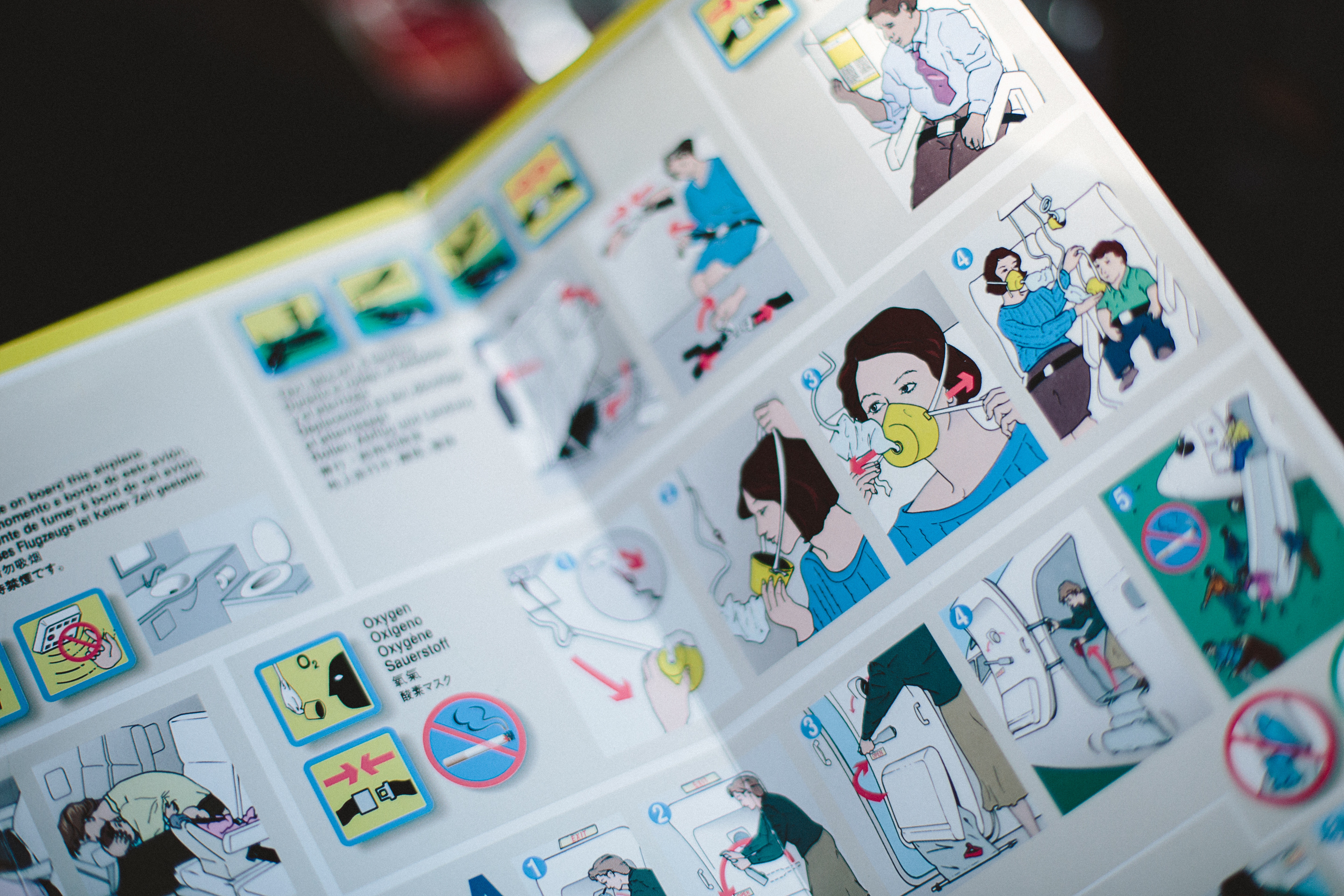
Upon entering a plane and settling into your seat, you are given a series of standardized instructions by the flight crew before takeoff. Most of us have heard them so often we’ve begun to tune them out, treating the safety briefing as background noise while we scroll through our phones or arrange our carry-on bags. But tucked within that routine monologue is a piece of advice that serves as a profound metaphor for the human experience. As part of the instructions, you are told that, “Should the cabin experience sudden pressure loss, oxygen masks will drop down from above your seat. Place the mask over your mouth and nose.” Crucially, the crew emphasizes that this mask is the first thing you should put on before anything else, including attempting to help another person.
Why do airlines feel the need to stress and emphasize putting your mask on first? On the surface, it feels counterintuitive, perhaps even cold-hearted. Our instincts—especially those of parents, caregivers, and partners—urge us to protect the vulnerable first. We imagine reaching for the child beside us or the elderly passenger across the aisle. Yet, the physics of high-altitude survival do not care for our sentiments. If you decide not to heed these instructions, the consequences can mean the difference between life and death. Without the mask, you slowly begin to lose oxygen, a state known as hypoxia. In this state, you don’t just feel tired; you slowly lose the ability to recognize faces and shapes, your cognitive functions fail, and eventually, you pass out. How helpful can you be if you can’t breathe and become unconscious? The answer is simple: not helpful at all. By neglecting your own needs in a crisis, you effectively remove the only capable helper from the situation, potentially leaving those you love in even greater danger.
The Biological and Emotional Reality of Hypoxia
In the context of flight, hypoxia is a physical emergency. In the context of our daily lives, “emotional hypoxia” is a slow-motion catastrophe. We are taking on so much and doing so much for others while systematically neglecting ourselves. We feel as though there is not enough time in the day to get things done, but the truth is deeper than a scheduling conflict. We are not prioritizing our basic needs and wants, leading to a state of internal depletion that mirrors the physical symptoms of oxygen loss.
🎯
Loss of Focus
Just as physical hypoxia impairs your vision, emotional exhaustion prevents you from seeing the reality of your relationships and your own potential.
📉
Diminished Capacity
You cannot pour from an empty cup. When you are depleted, your ability to provide genuine love, patience, and support is severely compromised.
🔄
The Vicious Cycle
Neglecting yourself leads to burnout, which leads to resentment toward the very people you are trying to help, damaging the foundation of the relationship.
It’s quite clear—PUT YOUR MASK ON FIRST! Only when you are breathing steadily will you be capable of focusing and taking better care of others, especially those you love. If we plan on being helpful to our family, friends, or society, let’s make sure we have enough oxygen to save ourselves and then help others.
Relationships as Mirrors: The Reflection of Neglect
In the framework of Mirrors & Growth, our relationships act as mirrors that reflect our internal state back to us. When we operate in a state of self-neglect, we often think we are being “selfless,” but the mirror of our relationship reveals a different story. What our partners and children see in the mirror is not a hero of sacrifice, but a person who is irritable, distracted, and physically present but emotionally absent. When you refuse to put your oxygen mask on first, the reflection you project is one of martyrdom, which creates a heavy burden of guilt for those around you.
Radical self-love is not a form of vanity; it is the foundation of accountability. To be accountable in a relationship means taking responsibility for the energy you bring into the room. If you are constantly exhausted because you refuse to set boundaries or take time for self-care, you are essentially bringing a “suffocating” presence to those you love. By securing your own oxygen first, you ensure that the reflection you project is one of stability, vitality, and presence. This is the ultimate gift you can give to your loved ones: a version of yourself that is whole and healthy, rather than a fragmented shell of a person trying to keep everyone else afloat while drowning.
💡 Insight: Self-sacrifice without self-sustenance isn’t love; it’s a debt you’re forcing others to pay later through your burnout and resentment.
Breaking the “Groundhog Day” Cycle
We must become more self-aware and get out of the vicious cycle of just going through the motions—just surviving—but not thriving. Many of us are living life like Bill Murray in the movie Groundhog Day. In the film, Murray’s character, Phil Connors, is trapped in a loop, repeating the same 24 hours over and over again. At first, he reacts with hedonism, then despair, and finally, a soul-crushing boredom. He is stuck because he is trying to change the world around him—trying to manipulate people and events to get what he wants—without ever changing himself.
The cycle only breaks when Phil stops trying to “fix” the day and starts fixing his character. He begins to learn, to grow, to care for himself, and to develop genuine skills and compassion. He puts his own metaphorical oxygen mask on by investing in his own “Becoming.” If we are to stop the cycle in our own lives and bring about change, we have to start doing things differently. We cannot expect a new result from the same patterns of self-neglect. We must shift from “going through the motions” to living with intentionality.

Self-care is the ultimate act of accountability.
The Anatomy of Healthy Selfishness
There is a subtle art to being “selfish” in a way that actually benefits everyone around you. In our society, “selfish” is often used as a weapon to shame people into compliance. However, in the Mirrors & Growth philosophy, we distinguish between toxic selfishness (taking at the expense of others) and healthy selfishness (preserving your own well-being so you can contribute to others). When you prioritize your sleep, your mental health, your hobbies, and your solitude, you are not taking away from your family. You are investing in the resource they rely on most: you.
Consider the elderly, the children, or the spouses mentioned in the flight safety briefing. They depend on you. If you pass out because you were too “noble” to put your mask on first, you have effectively abandoned them. The most compassionate choice you can make is to ensure your own survival. This applies to every facet of life. A mother who takes an hour to exercise is a mother who has more patience for her toddler. A partner who sets a boundary regarding work hours is a partner who is actually present at the dinner table. Accountability means recognizing that your well-being is a prerequisite for your utility.
How to Reclaim Your Oxygen
If you find yourself in the “Groundhog Day” loop of survival, here are four pillars to help you reset your priorities:
1. Audit Your Energy: Identify which tasks “depressurize” your cabin and which ones provide oxygen.
2. Set Non-Negotiables: Define 2-3 daily habits that are for you alone—reading, walking, or meditation.
3. Practice Saying No: Every “yes” to someone else is a “no” to your own oxygen supply if you are already at capacity.
4. Mirror Reflection: Ask yourself: “If I were my partner, would I want to be around the person I am being right now?”
Becoming: A Lifelong Journey
Putting your oxygen mask on first is not a one-time event; it is a daily practice of Becoming. Growth is not a destination we reach where we are finally “fixed” and can then ignore ourselves to serve others. Instead, growth is a lifelong journey of intentionality. Just as a plane requires constant fuel and maintenance to stay in the air, you require constant self-care to maintain your flight path in life. When we stop doing things differently, we stop growing. We become stagnant, and in that stagnation, we lose the ability to love others effectively.
The Mirrors & Growth framework reminds us that identity is formed through honest self-reflection. When you look in the mirror, do you see someone who is gasping for air, or do you see someone who is breathing deeply, fully present and ready to face the world? Radical self-love requires the courage to be seen as “selfish” by those who benefit from your depletion. But those who truly love you will prefer the version of you that is vibrant and whole. They will see that by putting your mask on first, you are ensuring that you will be by their side for the entire journey, not just the first few minutes of the crisis.
Ready to Start Breathing Again?
Stop surviving and start thriving by prioritizing the one person who makes all your other roles possible: Yourself.
Reflect & Grow
To deepen your journey of self-accountability, take a moment to sit with these two questions:
- The Mirror Question: If my daily energy was a reflection of how I truly feel about myself, what would that mirror show right now—abundance or scarcity?
- The Accountability Question: What is one “oxygen-giving” activity I have been neglecting, and how has that neglect affected my ability to show up for the people I love?
Mirrors & Growth
You’ve read the insight.
Now do the work.
The book and workbook that goes deeper than any blog post — with frameworks, exercises, and reflections built for lasting change.
✨ Ready to go deeper?
Mirrors & Growth: Self · Relationship · Becoming is a philosophical guide to radical self-love, accountability, and becoming who you were always meant to be. Get your copy in the shop →