
The Accountability Mirror: How Owning Your Story Sets You Free
The Accountability Mirror: How Owning Your Story Sets You Free
Most of us spend our lives running from the one person we can never truly escape: ourselves. We seek fulfillment in external achievements, validation from others, and the comfort of familiar routines. Yet, there is a persistent shadow that follows us—a sense that we are not quite the authors of our own existence. This is where the Accountability Mirror comes into play. It is a tool for radical self-reflection that asks you to stop looking at the world as a series of obstacles and start seeing it as a reflection of your internal state. Owning your story is not just a moral obligation; it is the most liberating act a human being can perform today.
Blame as a Prison, Accountability as the Key
It is easy to confuse accountability with blame, but they are polar opposites. Blame is a heavy, stagnant weight that looks backward. It seeks a culprit to shoulder the burden of a mistake, effectively stripping you of your agency. When you blame your parents, your partner, or your boss for your current state of unhappiness, you are essentially saying, “They have the power over my life, and I am powerless.” Accountability, however, is forward-facing and dynamic. It is the recognition that while you may not be responsible for what happened to you, you are entirely responsible for how you integrate that experience into your identity. To hold yourself accountable is to realize that the “why” of your past matters less than the “how” of your future. It is a shift from being a spectator of your circumstances to becoming the active architect of your own developing character and your life.
The Trap of the Victim Narrative
The stories we tell ourselves function as the blueprints for our lives. For many, these stories are rooted in victimhood. A victim narrative provides a strange kind of comfort; if everything is someone else’s fault, you never have to risk the vulnerability of trying and failing. You are safe in your stagnation. However, this safety is actually a cage. When you look into the Accountability Mirror, you are forced to confront the ways in which you have participated in your own limitations. These truths are uncomfortable, but they are also keys to the locks. By admitting “I chose this,” you simultaneously realize “I can choose something else.” Accountability is the bridge between the version of you that is stuck and the version of you that is becoming. It is the moment you reclaim the pen to write your next chapter.
Transform Your Inner Life
This is one of the core pillars explored in Mirrors & Growth: Self · Relationship · Becoming — a book about the inner work that transforms your outer life.
Relationships: The Ultimate Accountability Mirror
In the framework of Mirrors & Growth, relationships are perhaps the most vivid mirrors we encounter. We often enter partnerships hoping the other person will fix our broken pieces or fill our voids. When they inevitably fail to do so, we feel betrayed. But a relationship is not a healing clinic; it is a mirror that reveals who we are under pressure. If you find yourself repeatedly facing the same conflicts, the Accountability Mirror asks you to look inward. What are you bringing to the table that invites these dynamics? Radical self-love requires you to own your triggers. Instead of asking, “Why are they doing this to me?” ask, “What part of me is reacting this way, and what does it need?” When you take 100% accountability for your side, the relationship transforms from a battlefield into a laboratory for growth. You stop trying to change the reflection and start changing the person standing in front of the mirror every day.
Language Audit
Stop saying “I can’t” when you really mean ”
You’ve read the insight.
Now do the work.
The book and workbook that goes deeper than any blog post — with frameworks, exercises, and reflections built for lasting change.
The Mirror Effect: Why Your Inner World Shapes Your Outer Bonds
The Mirror Effect: Why Your Inner World Shapes Your Outer Bonds
We often move through our lives believing that our relationships are external events—things that happen to us, involving people who act upon us. We treat a difficult partner, a distant friend, or a recurring conflict as a series of unfortunate weather patterns we simply have to endure. However, the most profound shift in personal evolution occurs when we realize that our relationships are not just external encounters; they are mirrors. This is the “Mirror Effect,” a philosophical cornerstone that suggests the quality of your outer bonds is a direct, unfiltered reflection of the relationship you have with yourself.
When we look at our social landscape, we aren’t just seeing other people; we are seeing our own expectations, our unhealed wounds, and our deepest beliefs about what we deserve. If you find yourself consistently met with neglect, it is time to ask where you are neglecting your own needs. If you feel constantly judged, it is a signal to examine the severity of your inner critic. This perspective is not about blame—it is about radical accountability and the realization that your inner world is the architect of your outer reality.
The Blueprint of Attraction: How Self-Perception Shapes Your Circle
The people you attract and, more importantly, the people you choose to keep in your life, are drawn to the energy of your self-identity. We often speak of “vibes” or “chemistry,” but these are frequently just code words for familiarity. We are subconsciously drawn to individuals who treat us in a way that aligns with our internal narrative. You cannot receive a level of love that you do not fundamentally believe you deserve. If your inner world is filled with self-doubt, you will likely accept bonds that reinforce that doubt because they feel “right” or “safe” in their familiarity.
This is why radical self-love is a prerequisite for healthy connection. It is not a vanity project; it is a recalibration of your internal compass. By shifting your identity from one of scarcity to one of worth, you change what you are willing to tolerate. You begin to act as a gatekeeper of your own peace. When you cultivate a rich, supportive relationship with yourself, you no longer look to others to fill a void; instead, you look for people who can share in the abundance you have already created within.
Identity Formation
Your outer bonds are a physical manifestation of who you believe you are at your core.
Accountability
Owning your part in the patterns you repeat is the only way to break the cycle of stagnation.
Conflict as a Signal: Decoding the Internal Friction
In the framework of Mirrors & Growth, conflict is rarely just about the topic at hand. It is an internal signal disguised as an external argument. When someone triggers a visceral reaction within us, they are often touching a part of our shadow—a part of ourselves we have suppressed, denied, or ignored. Perhaps their boundary-setting feels like “selfishness” because you haven’t yet learned the wisdom of being healthy-selfish. Perhaps their need for space feels like “abandonment” because you haven’t yet mastered the art of being your own anchor.
Instead of immediately reacting to the person in front of you, the Mirror Effect invites you to pause and look inward. Ask yourself: “What part of me is being reflected in this friction?” Nuance is essential here; growth is inherently difficult and love is active work. It requires the honesty to admit that the “flaws” we see in others are often the very traits we struggle to manage within our own skin. By treating every relationship challenge as a diagnostic tool for your own becoming, you transform every frustration into an opportunity for evolution.
Begin Your Journey of Becoming
If this resonates with you, this is exactly what Mirrors & Growth: Self · Relationship · Becoming explores in depth — a guide to understanding yourself so you can transform every relationship in your life.
Accountability: The Act of Looking Honestly into the Mirror
Most people spend their lives trying to clean the mirror because they don’t like the reflection they see. They change partners, change jobs, or move to new cities, only to find the same patterns waiting for them. Radical accountability is the realization that if you want a different reflection, you must change the person standing in front of the glass. It is the brave act of looking at your own behavior, your own communication styles, and your own fears without the shield of victimhood.
This level of honesty is painful, but it is also the source of your ultimate power. When you stop blaming the mirror, you reclaim the agency to change your life. Accountability means acknowledging that you are the common denominator in all your bonds. If you want more honesty from others, you must first practice brutal honesty with yourself. If you want more tenderness, you must first cultivate a gentle internal dialogue. You cannot give what you haven’t cultivated within, and you cannot demand from others what you are unwilling to provide for yourself.
Transforming Your Outer Bonds Through Inner Work
Becoming is a lifelong journey of intentional growth. As you do the inner work—healing the core wounds, establishing firm boundaries, and practicing self-compassion—your outer bonds will naturally begin to shift. Some relationships may dissolve because they can no longer find a “hook” in your new identity. Others will deepen and evolve, rising to meet the new standard of health and awareness you have set. This is the beauty of the Mirror Effect: as the internal landscape becomes more harmonious, the external world inevitably follows suit.
Ultimately, the Mirror Effect reminds us that we are the protagonists of our own stories. We are not passive observers of our relationships; we are their creators. By focusing on our own identity and accountability, we move from a place of reacting to the world to a place of intentionally becoming the person we wish to meet. Your relationships are the most honest feedback loop you will ever have. Listen to them, learn from them, and use them as the transformative force they are meant to be.
Deep Reflection Questions
- If your closest relationship was a literal mirror of your current self-worth, what would it be telling you about how you value yourself?
- What is a recurring conflict in your life that you have blamed on others, and what might it be signaling about a part of yourself that needs attention?
You’ve read the insight.
Now do the work.
The book and workbook that goes deeper than any blog post — with frameworks, exercises, and reflections built for lasting change.

Are You Compromising Your Freedom
Are You Compromising Your Freedom
Humans are inherently social creatures. This fundamental drive for connection is precisely how we were able to dominate other species and construct the complex, interconnected world we inhabit today. From the earliest civilizations to the modern digital age, making connections and learning from one another has been the engine of our collective growth. We thrive when we share ideas, but true progress occurs when we take that knowledge and incorporate it into our personal lives, reaching for higher personal achievements. However, a silent struggle exists beneath this social fabric. We do not all adapt at the same rate. For many, a resistance to change or a tendency to ignore solutions for self-improvement creates a subtle but dangerous stagnation. Unknowingly, this behavior leads to a profound dependency on external things and people for our progress and sense of worth. When we stop growing from within, we begin to look outward for permission to exist, and in doing so, we begin to compromise the very freedom that defines our humanity.
Reliance on Others vs. Self-Reliance
Relying on external factors to improve our lives effectively hands over the keys of our kingdom. When we look to others to validate our choices or provide our happiness, we give that person or thing absolute control over our internal state. If your joy is solely determined by an external factor, then by definition, that factor also determines when you are sad, depressed, regretful, or moody. You become a passenger in your own life, reactive rather than proactive. Eventually, the realization hits: you are not in control of your emotions or your destiny. This realization rarely brings peace; instead, it fosters a deep-seated anger, bitterness, and resentment toward the very people you once depended on for support.
In the “Mirrors & Growth” framework, we understand that relationships are mirrors. If you feel trapped or controlled by another, it is often a reflection of your own refusal to take accountability for your happiness. Freedom is not something that is granted to you by a benevolent partner, employer, or society; freedom is a choice you make every morning. When you trade that choice for the “comfort” of having someone else decide for you, you aren’t just seeking help—you are surrendering your identity. Self-reliance is the antidote to this surrender. It is the practice of trusting your own power and resources, even when the path is uncertain.
The philosopher Ralph Waldo Emerson famously argued in his essay, “Self-Reliance,” that polite society often has an adverse effect on personal growth. He viewed society as a “joint-stock company” where members agree, for the sake of better securing their bread, to surrender the liberty and culture of the eater. Emerson believed that self-sufficiency gives one the freedom to discover their true self and attain genuine independence. We have all experienced moments where we made a decision that benefited a group or another individual while our inner voice screamed in disagreement. We tell ourselves we are being “good” or “selfless,” but often, we are simply being fearful. Altruism is a noble trait, but when it is used as a mask for the fear of standing alone, it becomes a cage. Putting a group’s interest above your own can bring joy, but if it requires the erasure of your soul, it will inevitably lead to immense psychological pain.
The Erosion of Identity Through People-Pleasing
One of the most common ways we compromise our freedom is through the habit of people-pleasing. This is identity erosion in slow motion. Every time you say “yes” when you mean “no,” a small piece of your authentic self vanishes. We do this because we fear the unknown consequences of disappointing others. We fear that if we show our true colors—our true needs and boundaries—the people around us will leave. But consider this: if someone only loves the version of you that never disagrees, do they actually love you? Or do they love the convenience you provide? Reclaiming your freedom requires the radical self-love to be “selfish” enough to protect your energy and your truth.
Radical Accountability
Freedom begins the moment you stop blaming others for your circumstances and start asking how you contributed to your own cage.
Boundary Setting
Boundaries are not walls to keep people out; they are the gates that protect your freedom of expression and mental health.
Intentional Becoming
Every choice you make either moves you closer to your true self or further away from it. Choose with intention.
Freedom of Expression: The Lessons of the Cage
To understand the psychological impact of lost freedom, let us look at a simple analogy. If you took a happy, friendly dog and placed him in a small cage for an entire year, only providing enough food and water to keep his body alive, the dog’s spirit would break. He would likely become unfriendly, depressed, or even aggressive. By stripping away his freedom of expression and his ability to roam, you have forced him into a state that is entirely counter to his nature. Dogs are designed to explore, to interact, and to roam. When that nature is suppressed, the result is pathology. We are not dogs, but our biological and psychological reactions to confinement are remarkably similar. When we allow societal expectations, toxic relationships, or our own fears to put us in a cage, we lose the very essence of what makes us human.
The difference between us and the caged dog, however, is our capacity for cognitive intervention. We have the unique power to use our mind to effectively change our environments and circumstances. While the dog depends on an outside hand to open the latch, we often hold the key to our own locks. We stay in the cage because it is familiar, because it offers a false sense of security, or because we have forgotten what it feels like to run free. Reclaiming that freedom is an act of “becoming”—a lifelong journey where we intentionally choose growth over comfort. It requires us to look into the mirror of our current reality and honestly assess where we have surrendered our power.
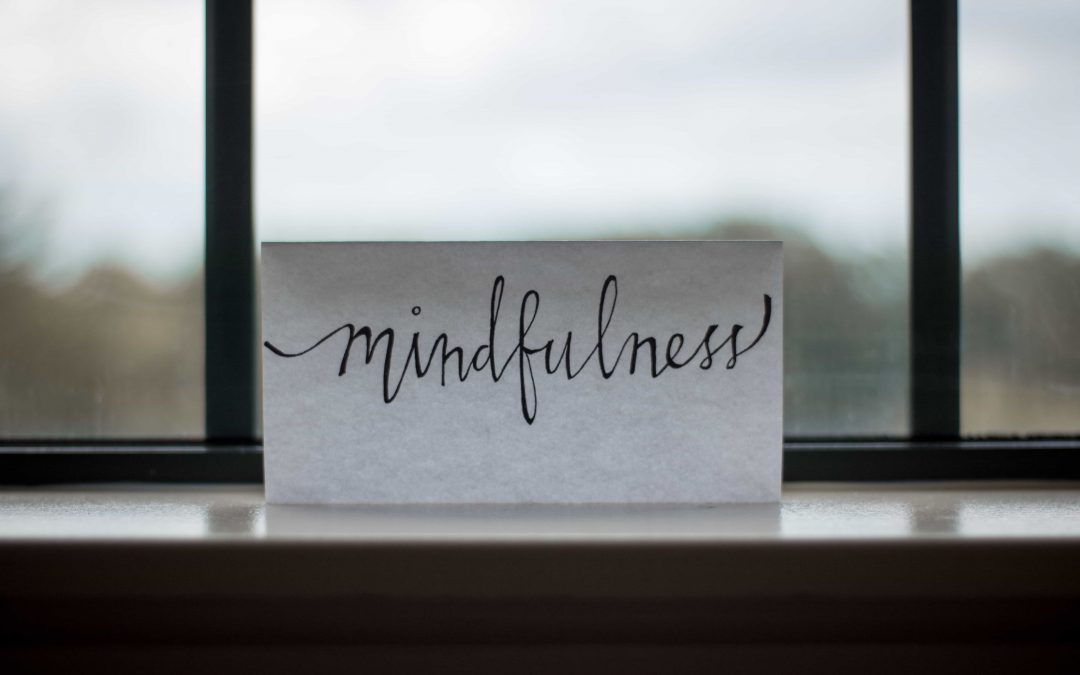
Activating the Power of Mindfulness
How do we begin the process of unlocking the cage? It starts with the mind. Activating the power of our mind allows us to develop strategies to change our situations in life. This is the core of mindfulness. Through the practice of mindfulness, we can effectively “slow the world down.” This temporal pause gives us the space to evaluate what is happening in our environment and our internal landscape. Without this pause, we are merely reacting to stimuli, repeating old patterns of dependency and people-pleasing.
This evaluation is critical. It provides the direction needed to take decisive action. When you identify the things you are not satisfied with—the compromises you have made that have diminished your soul—you gain the clarity to change them. Action is the ultimate expression of freedom. When we take action, we effectively take control over our lives. This control does not mean we can control everything that happens to us, but it means we control our response and our path. This shift from a victim mindset to an accountable mindset is the highest form of self-love. It is the recognition that you are worth the effort it takes to be free.
Compromising your freedom is, at its core, a compromise of your identity. You cannot be who you truly are if you are constantly molding yourself to fit the expectations of others or the limitations of your own fears. Every time you choose freedom over comfort, you are affirming your value. You are saying that your growth, your peace, and your authentic expression matter more than the ease of staying small. This journey of “becoming” is not always easy—in fact, it is often incredibly difficult—but it is the only path that leads to a life of genuine fulfillment and love. When you are free, you can love others from a place of abundance rather than a place of need. You can contribute to the world not out of obligation, but out of the overflow of your own empowered spirit.
Ready to Reclaim Your Power?
True freedom starts with radical self-reflection and the courage to stop compromising your soul for the sake of comfort.
Reflecting on Your Path
As you finish reading, take a moment to sit with the following questions. Don’t rush to answer them; let them mirror your current reality back to you. Be honest, be bold, and remember that growth begins with the truth.
- 1. Where in your life are you currently saying “yes” to others at the direct expense of your own peace and freedom?
- 2. If you were completely self-reliant and unafraid of judgment, what is the first major change you would make to your environment today?
Please share your thoughts and experiences in the comments below. We love interacting with this community as we all navigate the lifelong journey of becoming. If this article resonated with you, share it with someone who might be struggling to find their way out of their own cage. Together, we can choose freedom over compromise.
You’ve read the insight.
Now do the work.
The book and workbook that goes deeper than any blog post — with frameworks, exercises, and reflections built for lasting change.
Practicing Self-awareness
Practicing Self-awareness: The Mirror of Growth
Our modern world is characterized by a relentless bombardment of information. Between the 24-hour news cycle, the endless scroll of social media, and the high-production entertainment on our television screens, our attention has become the most valuable currency on the planet. These platforms are designed to keep us informed and entertained, and by all accounts, they are doing an exceptional job. However, there is a hidden cost to this constant external focus. When our eyes are perpetually fixed on the screen, we lose the ability to look inward.
We have become so distracted by the digital lives of others that many of us have delayed the very actions that would improve our own lives. We spend hours, days, and even years engaged in activities that offer zero growth or long-term value. This distraction serves as a convenient shield, allowing us to avoid the difficult work of self-reflection. We complain that we have no time for self-improvement, claiming, “There is no time for that project,” or “I have no time to develop a financial plan,” while unknowingly sabotaging the very happiness we claim to seek.
In the framework of Mirrors & Growth, practicing self-awareness is the act of reading the mirror honestly. Most people look, but they do not truly see. They see a version of themselves filtered through the expectations of others, yet they fail to recognize the authentic identity beneath the surface. To gain control, we must first understand why we have been living on autopilot.
The Psychology of Conditioning
Why do we make so many excuses for not doing the things we know would make us happier? The answer lies in conditioning. As we navigate life, we incorporate behaviors and habits that are often programmed into us by external factors. Conditioning is the root of learned behavior, occurring through constant interaction with our environments. From our earliest years, we are shaped by the philosophies of our parents, the traditions of our families, and the rigid structures of our schools.
Many of us are living lives that were pre-designed by external forces rather than internal desires. When we live based on old philosophies that are no longer relevant to our current reality, we essentially hand over the steering wheel of our lives. This state of “autopilot” is a primary source of modern unhappiness. We feel a disconnect between who we are and what we are doing, yet we lack the self-awareness to identify the source of the friction. To break this cycle, we must transition from external validation to internal accountability.
Relationships as Mirrors
In the Mirrors & Growth philosophy, relationships serve as the ultimate diagnostic tool for self-awareness. Every interaction we have with another person acts as a mirror, reflecting our own insecurities, strengths, and unhealed wounds. When we find ourselves frustrated with a partner, a friend, or a colleague, self-awareness asks us to look past the surface level of the conflict. Instead of asking, “What is wrong with them?” we must ask, “What is this situation revealing about me?”
True identity formation occurs through this honest self-reflection. You cannot change what you refuse to acknowledge. If you constantly find yourself in relationships where you feel undervalued, the mirror may be reflecting a lack of radical self-love. Self-awareness is the gateway to accountability; it forces us to realize that while we cannot control the actions of others, we have absolute control over our reactions and the boundaries we set. By practicing self-awareness, we stop being victims of our circumstances and start being the architects of our growth.
Identity
Understanding who you are outside of societal expectations and family traditions.
Accountability
Taking ownership of your choices, reactions, and the current state of your life.
Becoming
Accepting that growth is a lifelong journey of intentional, conscious evolution.
Taking Radical Control
To achieve the “good life,” we must take radical control over three core areas: Health, Wealth, and Happiness. We often underestimate the power we have to create our own beliefs and traditions. Our future is not a predetermined path; it is shaped by the decisions we make every single day. Taking control begins with the realization that internal factors must carry more weight than external noise.
Self-awareness is not a destination but a practice. It requires the courage to sit in silence and the humility to admit when our current path is leading us away from our true purpose. When we commit to this internal work, we find that the external world begins to shift in response. Happiness is not something that happens to us; it is something we create through conscious action.
Shadow Work vs. Self-Criticism
A common pitfall in the journey of self-awareness is confusing it with self-criticism. Self-criticism is loud, harsh, and judgmental; it focuses on perceived failures and fuels shame. Self-awareness, however, is a neutral observer. It is the ability to look at one’s “shadow”—the parts of ourselves we usually hide or deny—with curiosity rather than condemnation.
Shadow work is a vital component of practicing self-awareness. It involves acknowledging our capacity for jealousy, anger, or selfishness. By bringing these traits into the light, they lose their power to control us from the subconscious. We stop reacting blindly and start responding with intention. This honest reflection is what allows for radical self-love. You cannot truly love yourself if you only love the “sanitized” version of your personality. You must love the whole mirror, cracks and all.
Four Steps to Start Your Journey
Every journey requires a map. If you are ready to reclaim your life from the forces of conditioning and distraction, follow these four pillars of self-aware practice:
1. Recognize the Excuse
Understand that every “I don’t have time” is actually an “I am choosing something else.” Recognize that procrastination is a defense mechanism against the fear of change. Once you name the excuse, it loses its power.
2. Quiet the Noise
You cannot hear your inner voice if the world is constantly shouting at you. Find a physical place of silence. Put away the devices. This stillness allows you to evaluate your current position without external interference.
3. Seek Clarity
Develop a sense of purpose that acts as a roadmap. Ask yourself: If external expectations didn’t exist, what would I pursue? Clarity is the antidote to the “autopilot” lifestyle.
4. Decisive Action
Awareness without action is merely a dream. Begin to move forward consistently using your roadmap. Action is how you commit to the new reality you are building.
The Virtue of Patience
It is important to note that you must be exceptionally patient with yourself during this process. Conditioning that has been reinforced for decades will not disappear overnight. Addressing internal factors can be painful; it often involves grieving the person you thought you were to make room for the person you actually are. This is the “becoming” phase of the journey—a lifelong process of refining your identity and strengthening your accountability.
Making a decision to build a life influenced by internal wisdom rather than external pressure is the ultimate act of self-care. It is how we regain control over our lives instead of letting life control us. By practicing self-awareness, we ensure that the “good life” we are building is actually our life, and not a copy of someone else’s highlight reel. Embrace the work, trust the mirror, and move toward the light of your own truth.
Reflection Questions
Take a moment to sit with these questions and answer them with radical honesty:
- If you stopped making excuses about “time,” what is the one project or personal change you would start today?
- When you look at your most difficult relationship, what parts of yourself are being reflected back to you that you have refused to acknowledge?
You’ve read the insight.
Now do the work.
The book and workbook that goes deeper than any blog post — with frameworks, exercises, and reflections built for lasting change.